Choose A Bible Reading Order That’s Right For You.
When I started reading the Bible, I thought that the best way to do it was by starting from Genesis and reading all the way through to Revelation.
I was wrong.
I got horribly stuck at the beginning of Leviticus! Next, I tried flipping around randomly through my Bible, but I battled to see the big picture and things seemed a bit disjointed.
If you feel the same way or you are new to reading the bible, then the right reading order can make scripture easier to understand and much more impactful.
I Will Be Really Sad If You Don’t Pin Me 🙁
Why can reading the Bible be so tricky?
The Bible isn’t arranged like a typical novel and it isn’t a single book, it is a collection of 66 books written by different authors over centuries. Its book order isn’t strictly chronological, so it can be confusing because its content ranges from ancient laws to poetry, prophecy, and letters.
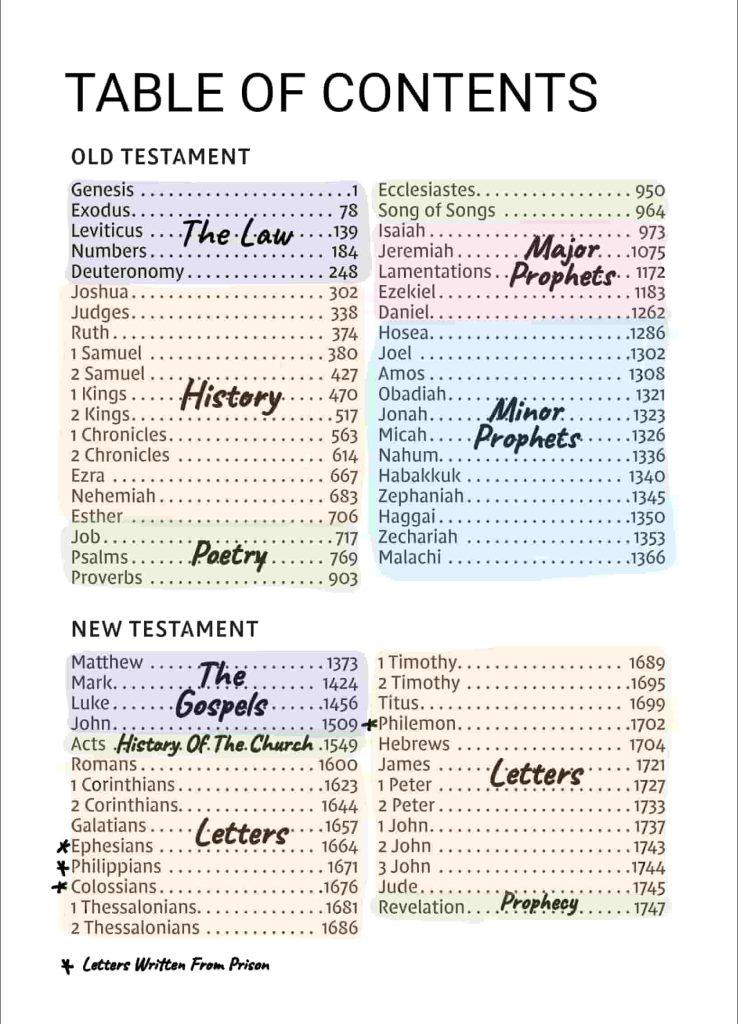
For example, the Old Testament is organized into:
- The Law (Genesis – Deuteronomy)
- History (Joshua – Esther)
- Poetry/Wisdom (Job – Song of Solomon)
- Prophets (Isaiah – Malachi)
The New Testament contains:
- The Gospels (Matthew – John)
- Acts (history)
- Letters / Epistles* (Romans – Jude)
- Revelation (prophecy)
Because of this, reading your Bible from cover-to-cover can feel overwhelming and even confusing, especially when you hit books full of genealogy, ancient laws, or poetic imagery.
* What are Epistles?
Epistles are letters found in the New Testament, written by apostles like Paul, Peter, James, and John. These letters were sent to followers in the early Christian churches to teach, encourage, and guide believers in their faith. The epistles explain important Christian beliefs and give practical advice for living as followers of Jesus.
You Can Pin Me To If You Like…. ❤️
Popular Bible Reading Orders
Let’s take a look at a few of the most popular Bible reading orders. Each one has its own strengths depending on whether you want to get the big picture, dive into the story of Jesus, or follow the historical timeline.
1. Chronological Order – See The Big Story Unfold
Because the Bible groups books by type (history, poetry, prophecy, etc.), and not in the order events actually happened, it can sometimes be confusing. A chronological reading plan puts the books and passages in the order which things took place over time. This way, you read the story of the Bible in the correct date order or sequence.
Reading the Bible in chronological order helps you to see how the events in different books fit together and how history, prophecy, and poetry overlap. This is great if you want to understand the Bible as a connected story.
Example Chronological Order Reading Plan:
Old Testament
- Genesis
(Creation, Fall, Patriarchs: Abraham, Isaac, Jacob, Joseph) - Exodus, Leviticus, Numbers, Deuteronomy
(Moses, the Law, Israel’s journey out of Egypt and through the wilderness) - Joshua, Judges, Ruth
(Conquest of Canaan, Era of the Judges, Story of Ruth) - 1 Samuel, 2 Samuel, 1 Kings 1-11, 1 Chronicles, 2 Chronicles 1-9
(Rise & reign of Saul, David, Solomon; 1 & 2 Chronicles overlap this period)- Psalms, Proverbs, Ecclesiastes, Song of Solomon
(Wisdom Books—many psalms were written during David’s life, and Solomon wrote several wisdom books; these can be read here)
- Psalms, Proverbs, Ecclesiastes, Song of Solomon
- Rest of 1 Kings, 2 Kings, 2 Chronicles 10-36
(Divided Kingdom, decline, and exile)- Prophets (Isaiah, Jeremiah, Ezekiel, Hosea, Amos, etc.)
(Prophets are best read alongside the historical text of the kings they preached to)
- Prophets (Isaiah, Jeremiah, Ezekiel, Hosea, Amos, etc.)
- Ezra, Nehemiah, Esther
(Return from exile, rebuilding Jerusalem, story of Esther set during the Persian period)
New Testament
- Gospels (Matthew, Mark, Luke, John)
(The life, death, and resurrection of Jesus) - Acts
(Early Church and missionary journeys)- Paul’s Letters (Romans–Philemon)
(Read alongside events in Acts) - General Letters / Epistles (Hebrews–Jude)
(Written by other apostles and church leaders during the early spread of Christianity)
- Paul’s Letters (Romans–Philemon)
- Revelation
(Prophetic vision, set at the end)
Notes:
- Some books, like Job, are difficult to date exactly, and they could appear differently in other chronological bible reading plans.
- Books of poetry (like Psalms) and prophecy (like Isaiah, Jeremiah, etc.) are interwoven with the historical books.
- Chronological reading plans sometimes split Psalms and prophetic books, placing individual chapters into the plan as you encounter corresponding events or characters in the history.
- Many Bible apps and websites offer guided chronological plans that break down the readings day by day, helping you follow the historical flow without extra effort.
2. Thematic Order – Focusing On Specific Topics
If you would like to explore major biblical themes such as grace, faith, salvation, etc., then a thematic bible reading order might be what you need!
How It Works
Instead of reading one book at a time, you follow a plan that guides you through passages connected by a common theme. This type of reading order is really helpful if you want a biblical answer to life’s big questions or you want to see how a topic develops from Genesis to Revelation.
Example Thematic Reading Plans
Salvation Story:
Genesis 1–3 → Exodus 12 → Isaiah 53 → John 3 → Romans 3–8 → Revelation 21–22
Follow the story of God’s plan to save humanity through Jesus.
Faith & Obedience:
Hebrews 11 → Genesis 12–22 (Abraham) → Joshua 1 → James 2
Explore examples of faith in action.
Prayer & Worship:
Psalms → Luke 11 → Philippians 4:6–7 → 1 Thessalonians 5:16–18
See how God’s people have prayed and worshiped throughout history.
Wisdom for Life:
Proverbs → Ecclesiastes → James → Sermon on the Mount (Matthew 5–7)
These books and verses have practical wisdom for daily living, relationships, and decision-making.
3. New Testament First – Starting with Jesus
For new believers, or those who don’t know the story of the Jesus, beginning with the New Testament is a great option!
Example New Testament Reading Order
- Gospel of Mark: Short and action-packed, giving a great overview of Jesus’ life and ministry.
- John: Helps you understand who Jesus is and why believing in Him matters.
- Acts: Records the rise of the early Church and the spread of the Gospel.
- Romans: Summarizes what Christians believe and how to live as a follower of Jesus.
- Galatians, Ephesians, Philippians, Colossians: Practical advice and guidance for Christian living and growth.
- 1 John, James, 1 Peter: Practical advice and encouragement for how to live as a Christian, especially during hard times.
- Revelation: Hope for the future and the ultimate fulfillment of God’s promises.
After you finish the New Testament, go back and read the Old Testament to understand the background and history behind Jesus and the early church.
4. Mixed Approach
With a mixed or blended approach, you can read different parts of the Bible at the same time. This keeps things interesting and helps you see how different books are connected.
Example Mixed Order
- Genesis: The beginning of everything
- Exodus: How God rescued his people
- Psalms: Poems and prayers for worship
- One Gospel (like Luke): The life and teachings of Jesus
- Acts: The start of the Christian church
- Romans: Why we need Jesus and how to follow him
- Proverbs: Simple wisdom for daily life
- Isaiah or Daniel: Messages from God about the future (prophecy)
- Ephesians or Philippians: Encouragement for living out your faith
- Revelation: Hope for what’s to come
This method gives you a taste of history, wisdom, worship, prophecy, and the story of Jesus, all in one reading plan.
5. For In-Depth Study: Book-by-Book with Extra Help
If you want to really understand the Bible, you can slowly read one book at a time and use extra tools like study Bibles, commentaries, maps, and videos to help you.
Example Deep Study Order
- Start with a short book (like James or Jonah).
These are easy to finish and give you a quick sense of accomplishment. - Read medium-length books (like Ephesians or Ruth).
- Move on to longer or more complex books (like Genesis, Matthew, or Acts).
- Use study guides or trusted resources for challenging books (like Leviticus or Revelation).
This approach is great for people who want to dig deeper and understand the full meaning of each book. It’s also helpful if you want to learn about the history and context of the Bible from different perspectives.
Tip:
To help you get the most from your reading, use resources like study Bibles and commentaries, Bible study guides, devotionals, and online tools and videos. These can provide background, answer tough questions, and keep your study time more engaging.
Which Bible Reading Order Is Best for You?
- New to the Bible? – Try the New Testament First or the Mixed Approach for a good start.
- Want the full story? Follow a Chronological Plan to see how everything fits together.
- Looking for personal growth or insight? Use a Thematic Plan to focus on topics that matter most to you.
- Ready for deep study? Go Book-by-Book with helpful study tools for a deeper understanding.
Final Tip:
Pair your reading with prayer and journaling. Ask God for understanding, and look for ways to apply what you learn each day!
Make the Most of Your Bible Reading
No matter which reading order you choose, reflection and prayer are key to making God’s Word stick with you each day.
Try these:
- Journaling: Start keeping a journal where you can write down what stands out to you, any questions you have, or how you want to apply what you read.
- Prayer: Begin and end your reading by asking God for understanding and guidance.
- Reflection: Take a few minutes to think about how today’s reading connects with your life.
Short on time?
- Check out our Verse of the Day for a quick, meaningful Scripture, devotional thought, and prayer – perfect for busy mornings! This gets updated every day, so bookmark the page for a new verse every morning. Each of these short devotionals connects you to deeper, in-depth devotionals if you want to go deeper.
- Dive deeper with our Daily Devotionals, which include reflection questions and journaling prompts to help you learn and grow. Each week, we cover a different topic or theme, which is great if you like the thematic approach to reading your Bible. This is an easy way to keep up with a simple Bible reading order if you would like to!
Bookmark these pages so that you never have to wonder what to read each day – you’ll be able to stay on track with your Bible Reading!
And don’t forget to sign up for our weekly newsletter. Each issue includes links to all the devotionals for that week’s theme, so you’ll always have a reading order at your fingertips.