

Pick a person, learn their story, and discover what their life teaches you about yours.
Welcome back to our bible study methods series. We’ve covered quite a bit together so far – the SOAP method, WORD, SUNSHINE, HEAR, REAP, and the Inductive method. Today I’m excited to introduce you to something a little different.
We’re going to look at the character Bible study method. I love this method because it’s the perfect way to get to know the people in the Bible as real people with real struggles – just like us!
If you enjoy this method, please pin it so others can find it too!
What is a Character Bible Study?
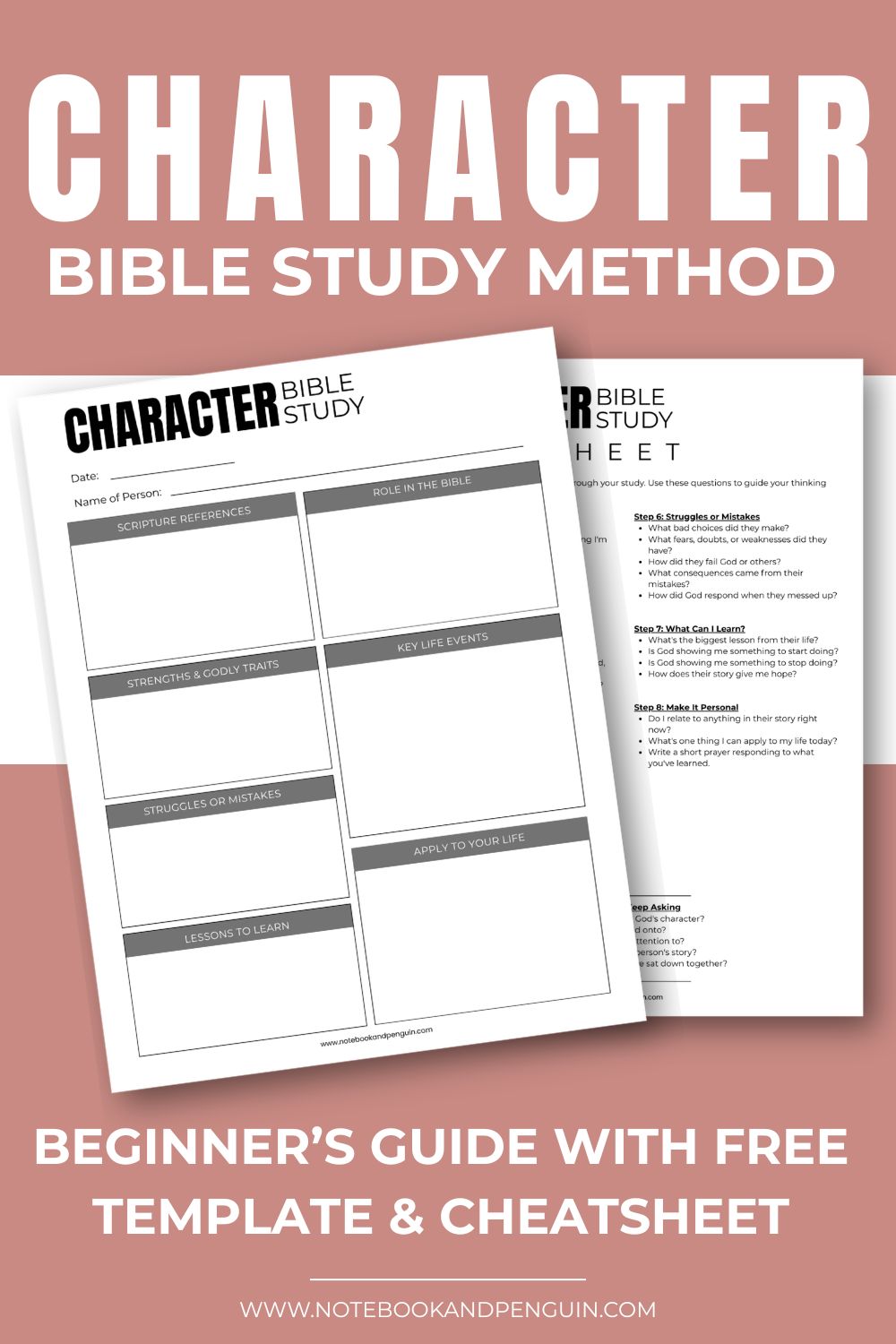
A character study means picking one person in the Bible and learning everything you can about them. You look at their story, their choices, their failures, and their faith. Then you ask what their life teaches you about yours.
Character study in the Bible is powerful because these weren’t perfect heroes. They were regular folks. Elijah was “a man just like us” (James 5:17). Peter said dumb things. David messed up big time. Sarah laughed at God. If God could work through them, He can work through you and me too!
Why Study Bible Characters?
Although it can sometimes feel like we can’t really relate to the people in the Bible anymore, the truth is that they dealt with much of the same stuff we do – fear, doubt, family drama, tough decisions. When you study their lives, you start to see yourself in their stories.
How to Do a Character Bible Study
Ready to learn how to do a character Bible study? Let me walk you through a simple process. You can grab a notebook or use our Bible character study worksheet to keep track of what you find (download our free character Bible study PDF at the end of this article).
Step 1: Pick Your Person
Choose someone you want to learn from. Maybe start with a well-known figure like Abraham, David, or Ruth. Or pick someone lesser-known like Abigail or Barnabas. There’s no wrong choice here!
Step 2: Find All the Passages
Grab a study Bible or concordance and look up everywhere this person appears in Scripture. For someone like David, that’s a lot of verses, so just pick a few key moments. For others, you might want to record and read every verse.
Step 3: Role In The Bible
As you read the person’s story, ask things like:
- Where did this person live? What was their world like?
- What do I know about their family, their job, their personality?
- How did others treat them? What did they say about them?
- What was their biggest struggle or conflict?
- How did they respond to God both in faith and in failure?
Step 4: Key Life Events
Now it’s time to map out the major moments in this person’s life. What happened to them? What did they do?
Look for things like:
- How God first spoke to them or called them
- Major victories or successes they experienced
- Pivotal moments that changed everything
- Key relationships that shaped them
- How their story ended
Don’t just list facts though. Ask yourself: What stands out? What surprises me? What would I have felt if I lived through this?
Step 5: Strengths & Godly Traits
What qualities did this person have that you can admire or even learn from?
Maybe they were:
- Brave when everyone else was scared
- Loyal to family or friends even when it cost them
- Humble enough to admit when they were wrong
- Faithful through long seasons of waiting
- Generous with what they had
- Bold in speaking the truth
- Persistent in prayer
- Quick to worship or thank God
Questions to ask yourself: What could I copy from this person? Is there a trait here I want to ask God to grow in me?
Step 6: Struggles or Mistakes
I think this is the section that we can all relate to because we’ve all messed up at one time or another.
Look for things like:
- Bad choices they made
- Fears or doubts they struggled with
- Times they failed God or others
- Character flaws that kept tripping them up
- Consequences they faced
- How they responded when confronted
Maybe they were:
- Impulsive and spoke without thinking
- Prideful and thought they knew better
- Afraid when they should have trusted
- Bitter or angry about their circumstances
- Tempted in ways that felt overwhelming
- Slow to believe God’s promises
Ask yourself: Do I share any of these struggles? What can I learn from their mistakes? How did God respond to them when they failed?
Step 7: Look For The Lessons
What can you learn from their life? Maybe it’s something to copy, or maybe it’s a mistake to avoid.
Step 8: Make It Personal
Ask yourself: Is there something in this person’s story that connects to my life right now? Maybe you relate to their fear, their doubt, or their courage. Write down ways you can apply what you’ve learned.
Bonus Step
Here are a few bonus questions to ask yourself, no matter what Bible study method you are using:
- What does this teach me about God’s character?
- Is there a promise here I can hold onto?
- Is there a warning I should pay attention to?
- How does Jesus connect to this person’s story?
- What would I ask this person if we sat down together?
Character Bible Study Example: Let’s Try Peter
Let’s take a look at a real example – Peter – the disciple who walked on water, then sank like a rock.
Scripture References: The Gospels (Matthew, Mark, Luke, John), Acts 1—12, Galatians 2, and 1 & 2 Peter
Role in the Bible – Who was Peter? A fisherman from Galilee. Impulsive, loud, and often said the wrong thing at the wrong time. But Jesus saw something in him and called him a “rock.”
What were his key moments? He walked on water (Matthew 14). He declared Jesus was the Messiah (Matthew 16). He swore he’d never deny Jesus – then did exactly that (Matthew 26). But after the resurrection, Jesus restored him (John 21).
Peter’s strengths: Boldness, loyalty, leadership, honesty, and faith.
Peter’s struggles or mistakes: Impulsiveness, doubt, and fear.
What can I learn? Peter messed up badly at times, but Jesus didn’t give up on him. His failures didn’t define him. Peter’s story also shows me that God uses ordinary people to do extraordinary things and that growth takes time.
How can I apply this? When I fail, I’ll remember Peter. Instead of hiding away, I’ll admit my mistakes and let Jesus restore me. I’ll keep moving forward no matter what.
Bonus Questions: God saw Peter’s potential long before Peter saw it himself. Even though Peter wasn’t perfect, God still used him to do incredible things. Peter’s story demonstrates how God is patient and kind, no matter how badly we mess up.
Where to Start: 20+ Great Bible Characters to Study
Not sure who to pick? Here’s a list of characters to get you started. I’ve mixed well-known names along with some hidden characters you might not have explored yet (I’ve also included links to any devotionals we have).
Old Testament Characters
- Adam – The first human. His story teaches us about beginnings, choices, and consequences. (Genesis 1-5)
- Eve – The first woman. She shows us the danger of doubting God’s words and how we still have hope even after we fail. (Genesis 2-4)
- Abraham – He teaches us about trusting God’s promises even when they seem impossible. (Genesis 12-25)
- Sarah – Abraham’s wife. She struggled with waiting, laughed at God’s promise, and saw Him come through anyway. (Genesis 16-23)
- Hagar – An Egyptian slave used and abandoned by others, but God met her in the wilderness and promised to bless her (Genesis 16; 21)
- Jacob – The guy who started as a cheater but ended up changed after wrestling with God. (Genesis 25-50)
- Tamar – A woman denied justice twice, so she took bold action to secure her place in God’s story (Genesis 38)
- Joseph – Sold into slavery by his own brothers, yet God used it all for good (Genesis 37-50)
- Moses – From prince to fugitive to leader (Exodus-Deuteronomy)
- Rahab – A woman with a complicated past who became part of Jesus’ family line (Joshua 2, 6)
- Ruth – Loyalty and love in action (Book of Ruth)
- David – Shepherd, poet, king, mess-upper. His life is full of highs and lows we can all learn from. (1 & 2 Samuel)
- Michal – David’s first wife who loved him, saved his life, but grew bitter over the years (1 Samuel 14—19; 2 Samuel 3; 6)
- Bathsheba – A woman caught in David’s terrible choices, yet God didn’t write her off. She became the mother of Solomon and part of Jesus’ family line. (2 Samuel 11—12; 1 Kings 1—2)
- Esther – An ordinary girl put in an extraordinary position. She teaches us about courage and purpose. (Book of Esther)
- Job – The man who lost everything and still wrestled honestly with God (Book of Job)
- Daniel – Stood firm in his faith while living in a foreign culture. Lots to learn here about staying true to God. (Book of Daniel)
- Jonah – A prophet who ran from God, got swallowed by a fish, and still pouted when God showed mercy. A story about second chances and a stubborn heart (Book of Jonah)
- Leah – The unloved wife who kept hoping her husband would love her. God saw her sorrow and gave her children, including Judah in Jesus’ line. (Genesis 29—35)
- Samson – A judge with superhuman strength and terrible judgment. He wasted his gifts but found mercy one last time. (Judges 13—16)
- Job’s wife – Often dismissed as bitter, but imagine losing all ten children in one day (Job 2; 19; 31)
New Testament Characters
- Peter – The disciple who walked on water, and also denied Jesus. There is so much hope in his story. (Gospels, Acts)
- John – The “beloved disciple” (Gospels, Epistles)
- Martha – Often remembered for her busyness, but Jesus gently corrected her priorities. Many of us can relate. (Luke 10, John 11)
- Mary Magdalene – She followed Jesus faithfully to the cross and beyond. She was the first witness of the resurrection. (Luke 8; Mark 15—16; Matthew 27—28; John 19—20)
- The Samaritan Woman – Met Jesus at a well, and her life changed completely (John 4)
- Paul – Started as a persecutor, ended as a preacher. If God can change him, He can change anyone. (Acts, Epistles)
- Judas Iscariot – One of the twelve disciples who walked with Jesus for three years, yet betrayed Him for thirty pieces of silver (Gospels)
- Thomas – The disciple who doubted the resurrection and asked for proof (John 11; 14; 20)
How to Choose
Still stuck? Here’s a simple way to decide:
- Pick someone you’ve always wondered about
- Pick someone going through something you’re facing right now
- Pick someone whose story is totally unfamiliar
- Just close your eyes and point. Seriously! God can speak through any of them!
Quick Tips for Your First Character Study
- Start small. Pick one person and commit to studying them for a week.
- Read their story slowly. Don’t rush.
- Use your Bible character study worksheet and cheatsheet to track what you learn.
- Talk about them with a Bible study friend. It helps things stick!
Character Bible Study PDF Template And Cheatsheet
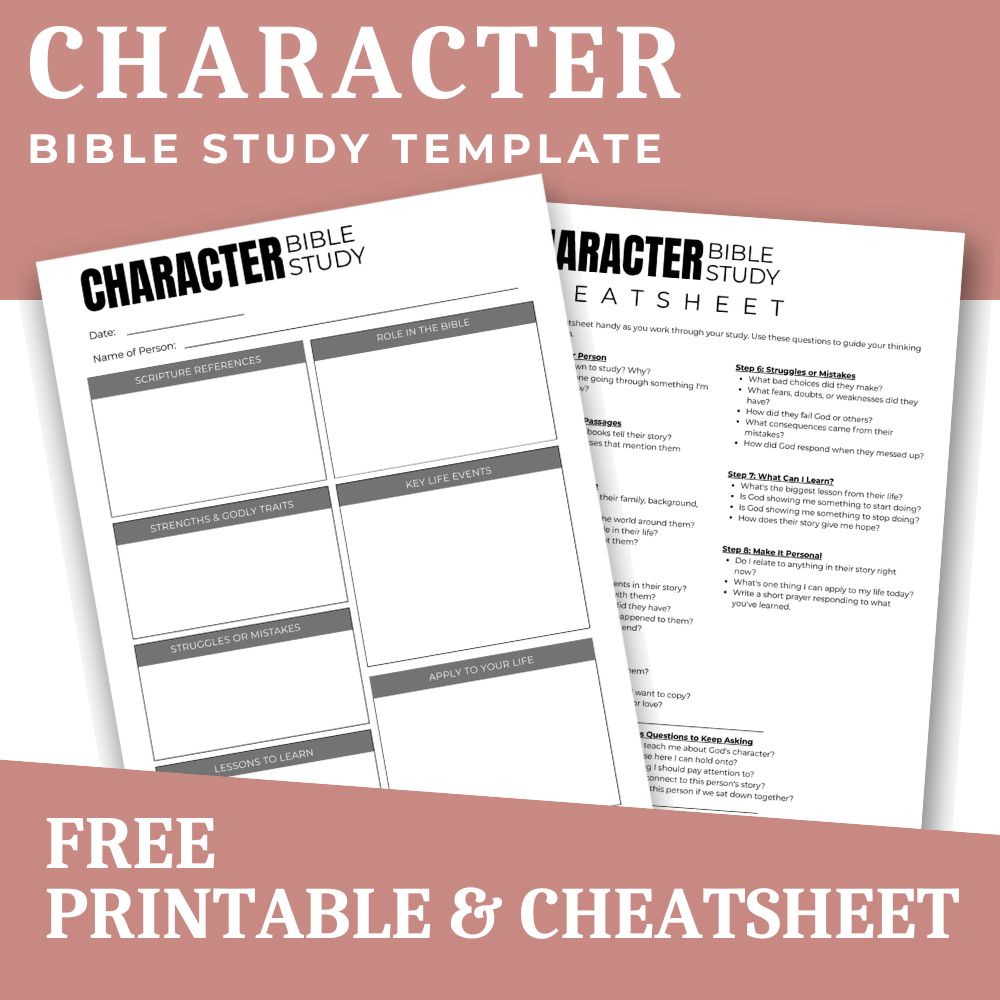
As promised, you can download a free copy of our Character Bible Study worksheet right here! It inludes a cheatsheet with questions you can ask yourself to dig deeper into each character. It is in PDF format so it is easy to download and print. Alternatively you can use it in your favorite note-taking app.
Free Character Bible Study Template
Grab your free Character study PDF to help you get started!
Enter your email below, and we’ll instantly send your free templates straight to your inbox!
Common Questions People Ask
How long does a character study take? As long as you want! You could spend a whole month on one person, or do a quick study in an afternoon.
What if I pick someone with very little written about them? That’s okay! Include every reference you can find. Sometimes even the shortest stories can teach big lessons!
Can I do this with a group? Absolutely! Character studies are great for groups. Everyone can share what they noticed and learned.
Ready to Start Your Own Character Study?
I hope this guide gives you a clear picture of the character Bible study method. It’s one of my favorites because it makes the Bible feel so human and relatable! Why not pick someone this week and give it a try? Grab our simple Bible character study sheet or just a notebook and start exploring. You might be surprised how much their story speaks to yours!
Other Bible Study Methods To Try
We’ve created a collection of other Bible study methods that you can use if you want to try something new. Each of them also comes with free PDF templates to help you get started. Check them out here!