An Easy Bible Study Method For Beginners.
The WORD Bible study method is probably one of the most straightforward and effective Bible study methods out there. Just like the SOAP method, it’s built on a simple, memorable acronym that is easy to remember and just as easy to use. It is structured but simple, deep but not daunting. Just a clear, four-step path from reading the Bible to living it out.
It takes the guesswork out of “what to do next.” And the best part? You can use one simple page to get started. It is the perfect bridge between the deep-dive Inductive method and the devotional SOAP method.
Let’s walk through it together. By the end, you’ll have a new, incredibly versatile tool for your study toolkit. I’ve also included a free WORD Bible study template to make your first try effortless.
If you enjoy this WORD Bible study walkthrough, please would you pin it so others can find it too?
What is the WORD Bible Study Method?
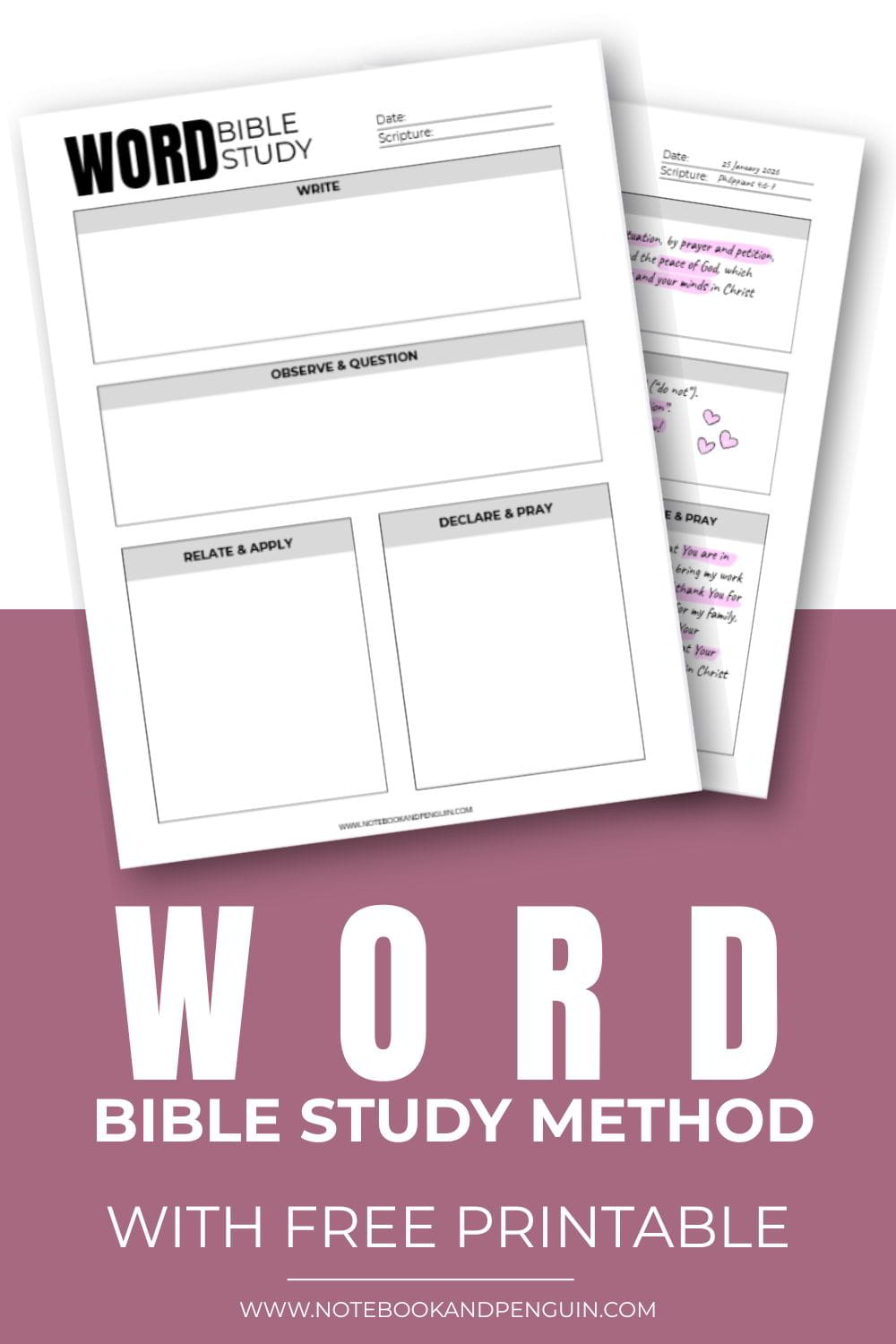
The WORD Bible study method is a simple Bible study method using an easy-to-remember acronym – WORD. Each letter guides and helps you to interact with the text in a different way.
It moves you from observation to application, all on one page. Think of it like a conversation starter between you and scripture. No fancy tools are needed. Just your Bible, a pen, and a willingness to learn and go slow. It works for any passage, whether it’s three verses or a whole chapter.
The WORD Method: Your Step-by-Step Guide
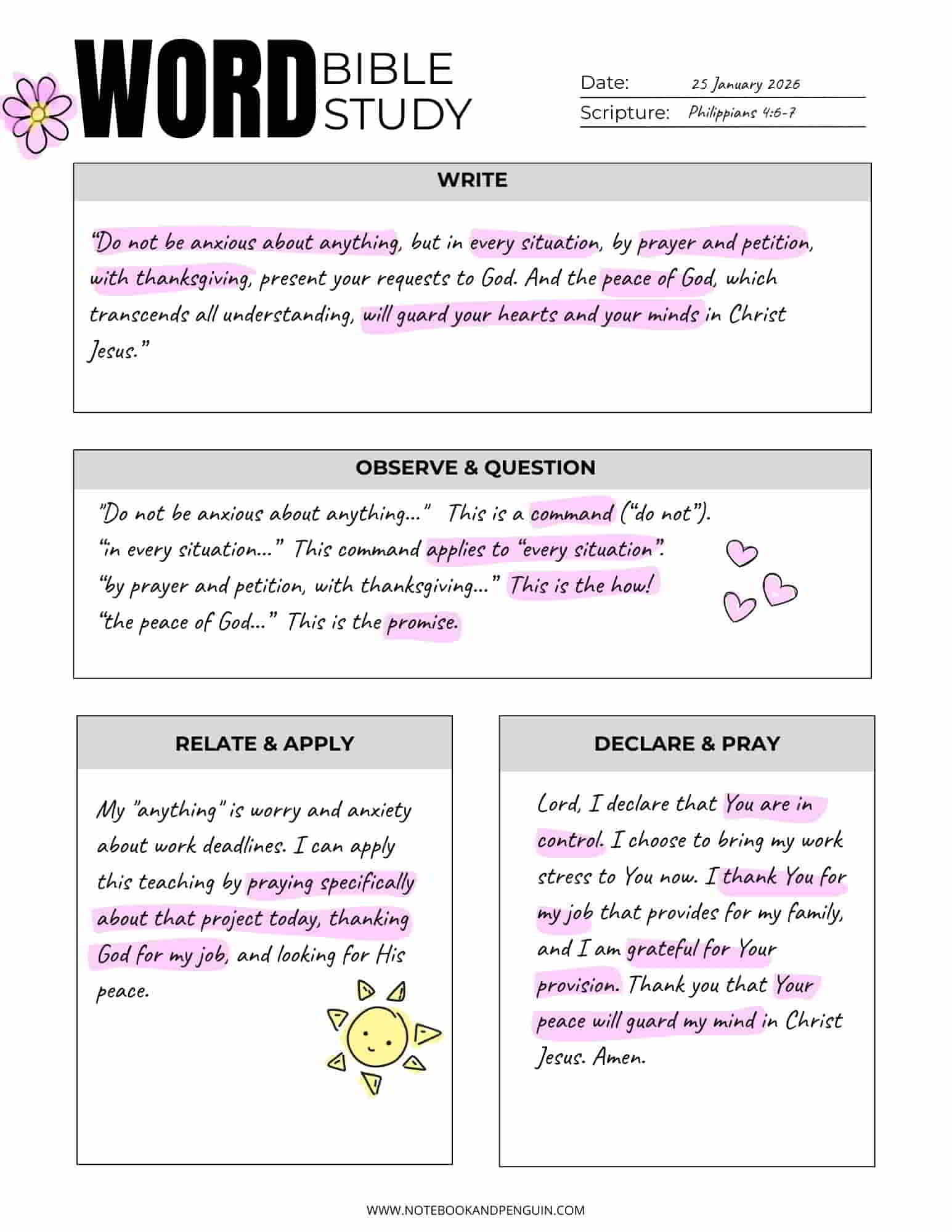
Let’s break down each letter. I’ll use Philippians 4:6-7 as our quick WORD Bible study method example.
W – Write
Copy down a key verse or two word-for-word.
O – Observe & Question
This is where you think, question, and reflect on what the scripture is telling you.
There is no right or wrong way to do this, so if you want you can simply jot down your raw observations. Otherwise, here are a few questions to help you get started.
Simple Starter Questions for Beginners
If you are new to this type of study, you can use these questions as starter questions. Just pick one or two to get started.
- What is the main point? In one sentence, what is this passage saying?
- What does it say about God or Jesus? Just one thing.
- Is there a command to follow? A “do” or “do not”?
- Is there a promise to believe? Something God says He will do?
- Is there a warning to heed? A consequence to avoid?
- What’s one thing that sticks out? A word, a phrase, or a feeling.
The beauty is, there’s no wrong answer. Your job isn’t to be a theologian; it’s to be a curious reader. Once you answer a simple question or two, you’ll often find yourself naturally asking the deeper ones.
Digging Deeper
If you want to dig a little deeper, then try asking questions like:
About God’s Character:
- What does this passage reveal about who God is – His nature, heart, or priorities?
- What does it show me or teach me about Jesus, the Holy Spirit, or the Father?
About the Context:
- What is the tone of this passage? (Is it encouraging, corrective, urgent, poetic?)
- Who was it written to and why? What did they need to hear?
- How does this verse/chapter fit into the overall story of this book?
About the Logic & Connections:
- Is there a cause-and-effect relationship here? (If I do this, then that happens…)
- Do I see a contrast, a comparison, or a conclusion being drawn?
- How does this scripture connect to or clarify another part of the Bible I know?
Example: What does “anxious about anything” really cover? How is prayer with thanksgiving the solution? What does God’s peace “guarding” your heart feel like, and what does it mean to you?
R – Relate & Apply
Now, make it personal. How does this scripture touch your life right now? Is there a promise to claim, a sin to confess, or an action to take? Be specific.
You could ask yourself these questions:
- What’s confusing or challenging to me about this scripture? (It’s okay to write down your doubts!)
- Does this scripture relate to anything specific happening in my life right now?
- Is there a command or instruction given?
- Is there a promise made?
- What can I do today to live out the teaching in this scripture?
Example: My “anything” is worry about work deadlines. I can apply this by praying specifically about that project today, thanking God for my job, and looking for that peace.
D – Declare & Pray
Turn your insights and discoveries into a prayer or a personal declaration of truth. Write it down.
Example: “Lord, I declare that You are in control. I choose to bring my work stress to You now. I thank You for my job that provides for my family, and I am grateful for Your provision. Thank you that Your peace will guard my mind in Christ Jesus. Amen.”
WORD Bible Study Method Example
If you are curious as to what a study like this might look like, I’ve created an example for you.
Why This Simple Method Works So Well
The WORD method forces you to slow down. You can’t just skim. Writing makes you pay attention to details you’d normally miss.
It’s incredibly flexible. It helps to transform your thinking, not just gather information. By ending with prayer (Declare), you ensure the truth moves from your head to your heart.
Common Struggles (& How to Beat Them)
“It feels too rigid.”
That’s okay! The letters are guides. Let the passage lead. If one section is huge and another is small, that’s fine. The free template helps.
“I don’t know what to write for ‘Reflect’.”
Start with basic questions: What is the main point? What does this reveal about God? What is confusing? There are no wrong observations.
“My application always feels vague.”
Try to get really specific. Instead of “I’ll pray more,” try “I will pray for 5 minutes about my conflict with [Name] each morning this week.” Commit to defined and actionable steps you can take each day.
How WORD Stacks Up to Other Methods
Unlike just reading a devotional (which is great!), WORD requires your active participation. You’re seeking God’s truth yourself.
It’s very similar to the popular SOAP method (Scripture, Observation, Application, Prayer) and they honestly are more alike than different.
Compared to the full inductive method, it’s less color and symbol-based but you can easily used ideas from the inductive method to highligh sections of your WORD study.
Your WORD Method FAQs
Q: How long should a WORD study take?
A: Anywhere from 5-20 minutes, depending on the number of verses you are studying. It’s about depth, not speed.
Q: Can I use this in a group?
A: Absolutely! It’s fantastic for group discussion. Everyone comes with their own observations and applications to share.
Q: What supplies do I need?
A: Just a notebook and a pen! Many people love using a dedicated journal or the printable template to get started.
Your Free WORD template to Get Started
I know starting a new habit is easier with a guide. That’s why I’ve created a clean, printable WORD Bible study template for you.
It has designated spaces for each letter of the acronym. Just print it, grab your Bible, and you’re ready to go. No more staring at a blank page!
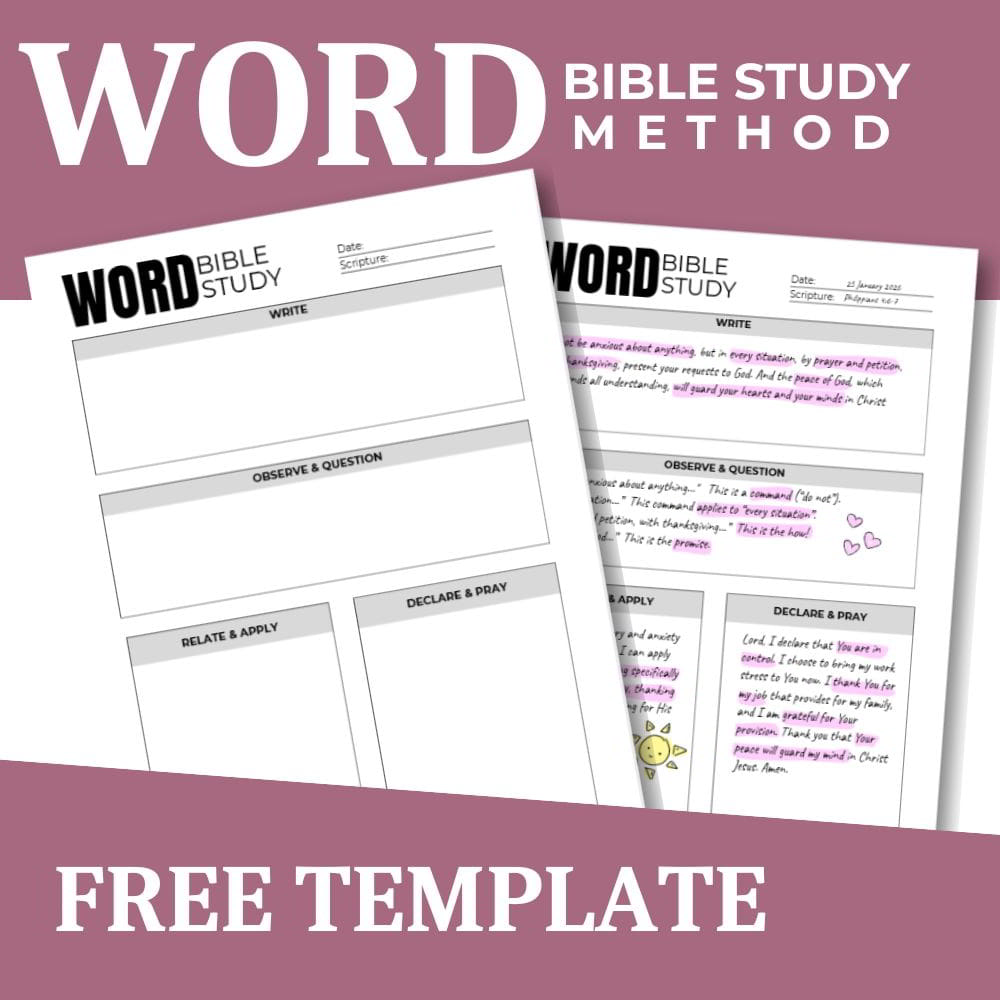
Free WORD Bible Study Template
Grab your free PDF WORD template to help you get started!
Enter your email below, and we’ll instantly send your free templates straight to your inbox!
Final Thoughts
I hope that you decide to give the WORD method a try! Remember, the goal isn’t perfection but rather a way to dig deeper into God’s Word in a meaningful way.
Why not give it a try this week? Pick a short passage – maybe Psalm 23 or Romans 8:38-39. Walk through W-O-R-D, and see what happens!
Other Bible Study Methods To Try
We’ve created a collection of other Bible study methods that you can use if you want to try something new. Each of them also comes with free PDF templates to help you get started. Check them out here!