

Practical Steps for Wise Christian Decision-Making.
Have you ever heard the phrase, “Look before you leap”? Most of us have. Yet in real life, how often do we sometimes just charge ahead, make a snap decision, or jump into things we don’t fully understand?
Ancient biblical wisdom doesn’t just tell us to get advice; it also calls us to be learners, to gather knowledge, weigh options, learn from others, and properly think things through before making choices.
Proverbs, mostly written by the famously wise King Solomon, is packed with insights about how people live and the consequences of their choices. In Proverbs 13, Solomon draws a vivid distinction between wise and foolish people: one group does their homework, the other acts without thinking.
The Scripture
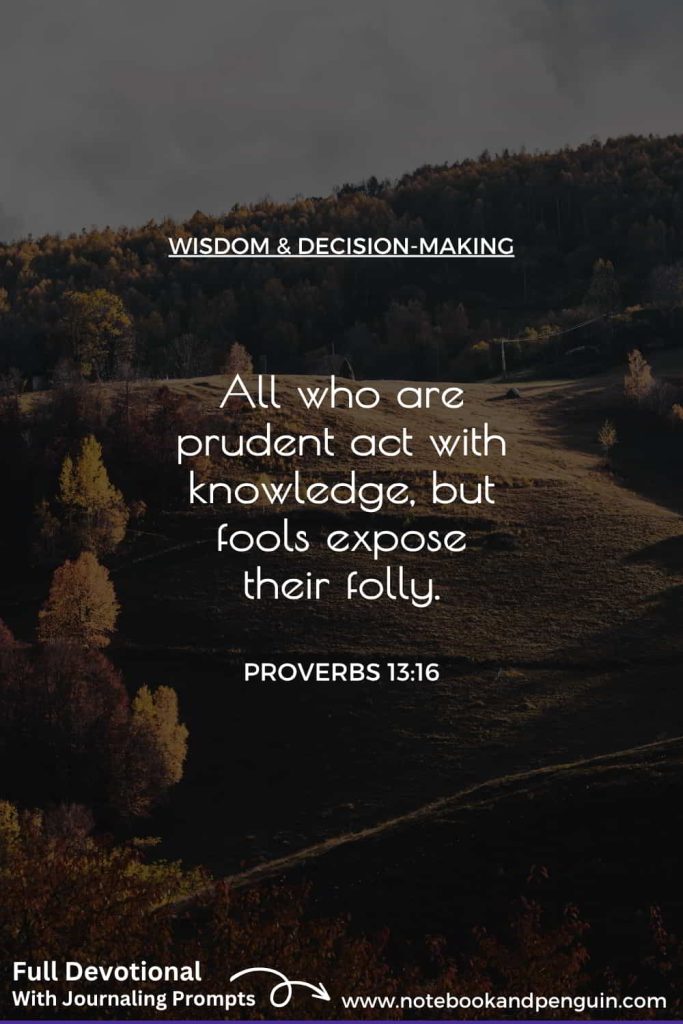
“All who are prudent act with knowledge, but fools expose their folly.”
Proverbs 13:16 (NIV)
Breakdown of the Verse
Let’s break it down:
- “All who are prudent act with knowledge…”
The word “prudent” means careful, thoughtful, and wise – someone who doesn’t just react but reflects. This person gathers facts, listens, and learns. Their decisions are built on a solid foundation because they’ve taken the time to understand the situation. Acting with knowledge means doing your homework, looking for understanding, and not being afraid to ask questions. - “…but fools expose their folly.”
In contrast, those called “fools” in Proverbs are driven by impulse. They act with very little thought or understanding, and sooner or later, their lack of preparation and insight shows. Their choices reveal their lack of wisdom to everyone around them.
Faith in Action: Learning is Part of Godly Wisdom
How do we put Proverbs 13:16 into real-life practice?
- Take time for research. Before you jump into a decision, pause. Read, ask questions, and search out understanding, no matter what you need to make a decision on whether it be finances, relationships, career moves, or even everyday choices, research always pays off.
- Ask for help. Know someone who’s already faced what you’re facing? Reach out. Learn from their journey, their mistakes as well as their successes.
- Don’t rush just because others do. Our culture often values speed over wisdom. God says: It’s wise to slow down and think.
- Pray for insight. Ask God to help you understand what you don’t see clearly. He loves to lead you into truth.
- Reflect on past decisions. What did you wish you knew before you started? How could a little more learning have changed your outcome?
- Practice humility. Admitting what you don’t know is a sign of strength, not weakness, in God’s book.
Reflection Questions
- Think about a time when you rushed into something without enough information. How did it turn out?
- Who do you know who models “acting with knowledge”? What can you learn from their approach?
- What big decision (or even small one) are you facing right now that could use more research or thought?
- Why do you think our culture often rewards speed over careful decision-making?
- What are some ways you can make seeking knowledge a natural part of your decision-making process?
- Are there areas where pride has stopped you from asking questions or learning from others? How could things be different if you practiced more humility?
- How can you balance trusting God with using practical wisdom and research as you make decisions?
Affirmation
I am a learner. I don’t have to know everything, but with God’s help, every decision I make can be built on wisdom and understanding.
Closing Prayer
Lord, thank You for inviting me to become wise, not just by listening to You, but by learning all I can. Keep me humble enough to admit where I lack understanding. Give me the patience to pause, learn, and look for advice instead of charging ahead. Open my heart and mind to knowledge, whether it comes through reading, wise friends, or even my own mistakes. Grow me into someone who acts with understanding, so that every decision honors You and blesses those around me.
In Jesus’ name, Amen.